
Listen to this story:
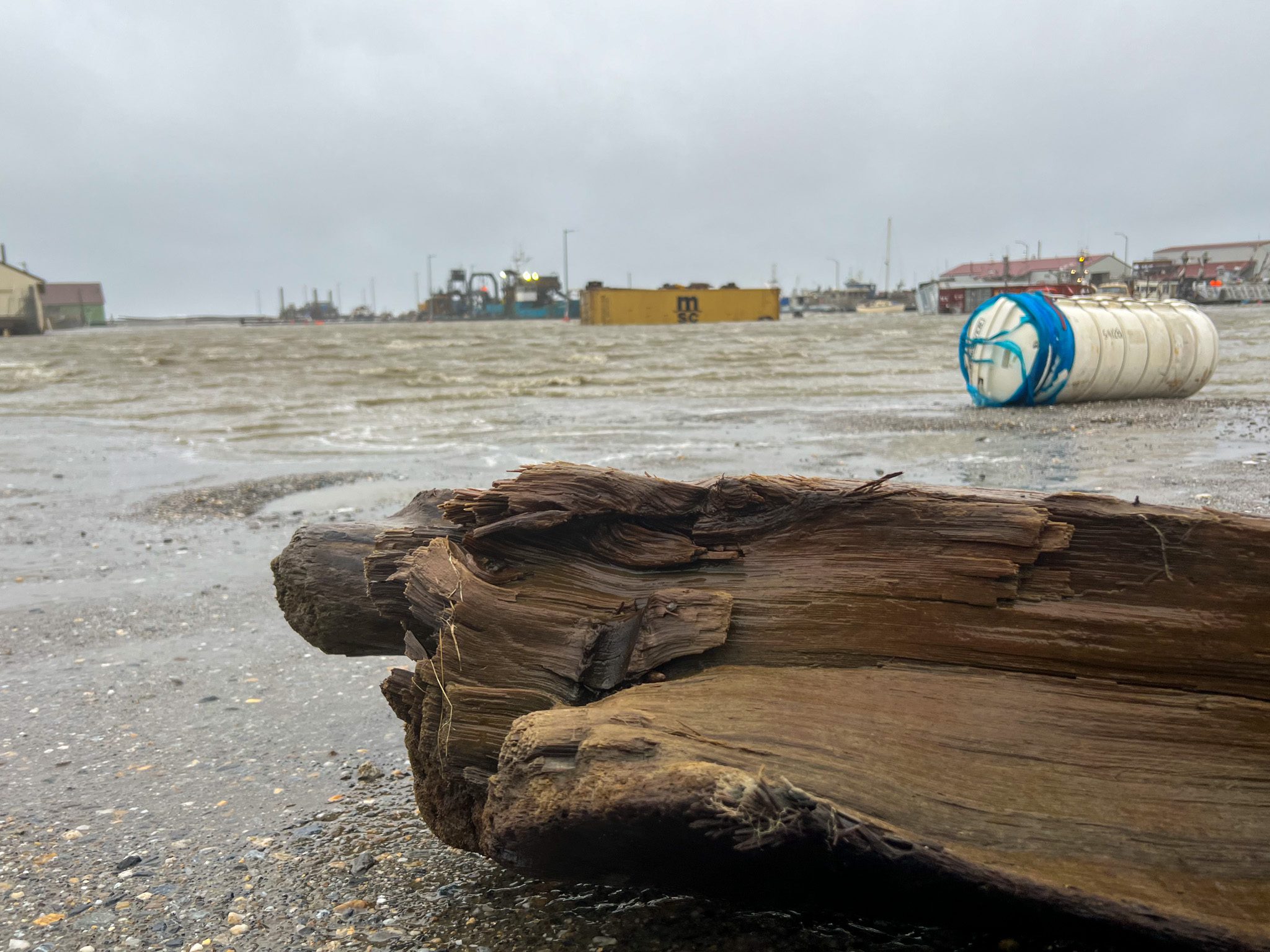
In western Alaska, fall storms can mean power outages, flooding, and days without access to services like running water.
While storms are unpredictable, state emergency officials say the time to prepare for a storm is long before it is in the forecast.
Alaska’s Division of Homeland Security and Emergency Management says having a home emergency kit is incredibly important for weathering a storm.
“It's one of the key steps that we look at when we ask people to prepare,” said Jeremy Zidek, Public Information Officer with the state of Alaska’s Division of Homeland Security and Emergency Management.
Zidek said households should plan to be self-sufficient for as long as two weeks if a storm cuts off access to stores, electricity or other services. There are three top priorities.

1. Water
Zidek said emergency water is one of the main things people need when basic services are cut off in a storm scenario.
“So if people can take some steps, get food-safe containers, fill them up when that storm is approaching, they have that reserve of water in case they need it,” he said. “[That] can be really critical.”
Zidek recommends storing one gallon of water per person per day. For a family of five, that would mean 70 gallons for two weeks. Storing that amount may not be realistic for every household, but he said residents should store as much as they possibly can.
2. Food
Take inventory of the pantry and freezer and set aside two weeks of easy-to-prepare food.
“For many people doing hunting and gathering, that's not that hard of a benchmark to reach because they're really preparing for the whole winter,” Zidek said. “But we want them to think about ways that they can protect that food.
A prolonged electrical outage can spoil food in freezers. Floodwater can ruin or wash away stored food.
Zidek recommends keeping two weeks of backup fuel for a generator to run a freezer, and raising food storage above anticipated flood levels when possible to prevent water damage.
3. Heat
Zidek recommends having a safe backup indoor heating source, like a woodstove or portable propane heater, and enough firewood or fuel oil to use it.
“When you have food, water, and those fuel sources, you can stay in your home,” Zidek said. “And that’s really the best place for folks during these disaster situations.”
Then, pack a go-bag
Have a bag prepared to grab and go if evacuating, or to serve as supplies if sheltering in place. Zidek recommends including:
- Warm clothes
- Flashlight, headlamp or lantern with extra batteries
- First-aid kit
- Basic tool kit
- Toiletries and cleaning supplies
- Bucket with bags for sanitation
- Over-the-counter medications and extra prescription medicine
- Spare eyeglasses
- Battery-powered or NOAA weather radio
- Cell phone charger
- Backup batteries or a power bank.
Zidek recommends avoiding candles during an outage because they provide limited light and can start fires.
If you have a pet, Zidek recommends preparing a separate pet kit with food, water, medications, vaccination records and comfort items.
Gather important documents
Collect critical documents like passports, driver’s licenses, birth certificates, and proof of home ownership or occupancy, and store them somewhere high and easy to reach. Zidek explained that in the case of a disaster, state and federal recovery programs require extensive documentation to prove identification and ownership.
“Those critical documents are really just that – they are critical for the recovery after a disaster has impacted you,” he explained. “If people can gather those together and have a good folder of all of those documents, they can really speed up their recovery process.”
Protect your home
Zidek recommends securing outdoor fuel tanks on solid footings to a house or another sturdy support to keep them from toppling over or floating away in floodwater.
When a storm is approaching, he recommends moving vehicles away from beaches and riverbanks and onto higher ground if it's available.
Make a written household plan
Written plans don’t need to be fancy. Zidek said to start with a piece of paper and a pen and write down where to go in the case of emergency and who is in charge of taking care of elders and minors. He also recommends writing down an out-of-community contact—a person in another town or state whom everyone can call if local phone service fails.
Some shelters may not be able to take pets, so before an emergency, make a plan for where animals would be transported if the household or community evacuates.
“After you’ve prepared your family and you have those emergency supplies, you’ve protected your own property,” he said. “Then you can be a real asset to your community because you’re self-sufficient.”
Know when to leave
Zidek said there is no single rule for deciding whether to shelter in place or evacuate. He explained storms are unpredictable, can change track quickly, and decisions often need to be made in the moment.
“That really comes down to each community making those determinations,” Zidek said. “Talking to your family about what the conditions are that would facilitate you leaving your home, talking to your community, and working to make that decision on a local level, because when we're trying to manage things from far away, we are not always aware of things that are taking place on the ground.”
He recommends setting a certain water level, wind speed, or official warning from local and state officials that would trigger a household or community evacuation ahead of a storm.
Zidek said if residents choose to stay, make sure utilities are shut off, backup communication is in place, and others know their location so they can send help if things deteriorate.
“It’s always better to evacuate and then say ‘That was not necessary’ than to be stuck somewhere and having to evacuate through the storm,” Zidek said.
Zidek said storm warnings are one of the few hazards Alaska communities can get days of lead time on, and the more notice you have, the more time you have to prepare.
Residents can follow up-to-date advisories, watches, and warnings through cell phone alerts, NOAA weather radios, and local media.
Community entities can work with the Division of Homeland Security and Emergency Management to create or update their Small Community Emergency Response Plan. The plan, sometimes called a “flip book,” includes checklists and contact information for the 24 hours before a storm and other stages of an emergency.
For more information, municipalities, tribes or community organizers can contact the Small Community Emergency Response Plan (SCERP) Coordinator David Lee at 907-428-7033.


