
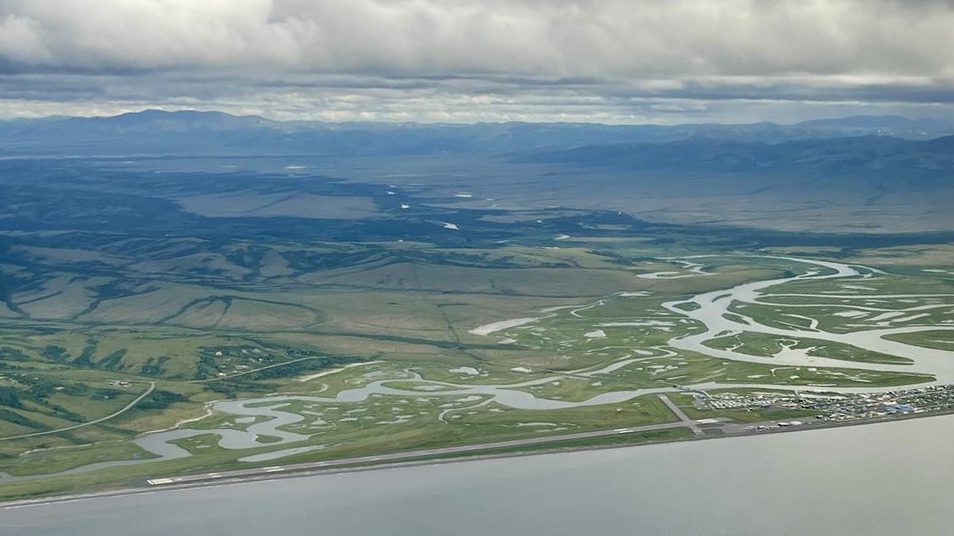
After months of back and forth between Unalakleet and the federal government, the Department of Transportation is moving forward with an unsubsidized Essential Air Service contract for flights to the western Alaska hub.
Ravn Alaska ceased service for the Anchorage-to-Unalakleet route in April, leaving the community of about 700 residents without direct airline service to Anchorage.
Unalakleet is eligible for subsidies from the EAS, a federal program that ensures remote communities stay connected to the national air system. The EAS entices airlines to serve these logistically challenging or low-profit routes with subsidies, although airlines don’t necessarily need subsidies to serve the route.
Kenai Aviation stepped in immediately after Ravn pulled out of the route, with twice-daily service to Anchorage on its Beechcraft King Air planes. Kenai was the only airline to submit an unsubsidized proposal, leading to the EAS to formally select Kenai for the contract on July 7.
Two other airlines, Alaska Central Express and Sterling Airways, doing business as Aleutian Airways, submitted subsidized proposals, which would cost the government millions of dollars annually.
10 local entities signed on to a letter supporting a subsidized proposal from Aleutian Airways in favor of Kenai. The letter cited lower ticket costs and larger and faster SAAB 2000 aircraft operated by Aleutian as driving factors.
Since assuming services in April, Kenai has run into troubles maintaining regular service to Unalakleet. On numerous occasions the airline has cancelled flights or contracted out to Reeve Air to service the route. One-way fares on Kenai cost about $500.
Kenai did not respond to a request for comment.
In the same letter announcing the award to Kenai, the EAS also announced its selection of Alaska Central Express for subsidized service to the Yukon-Kuskokwim community of St. Marys. The two-year, subsidized contract will cost the DOT $3,072,196 annually.


