
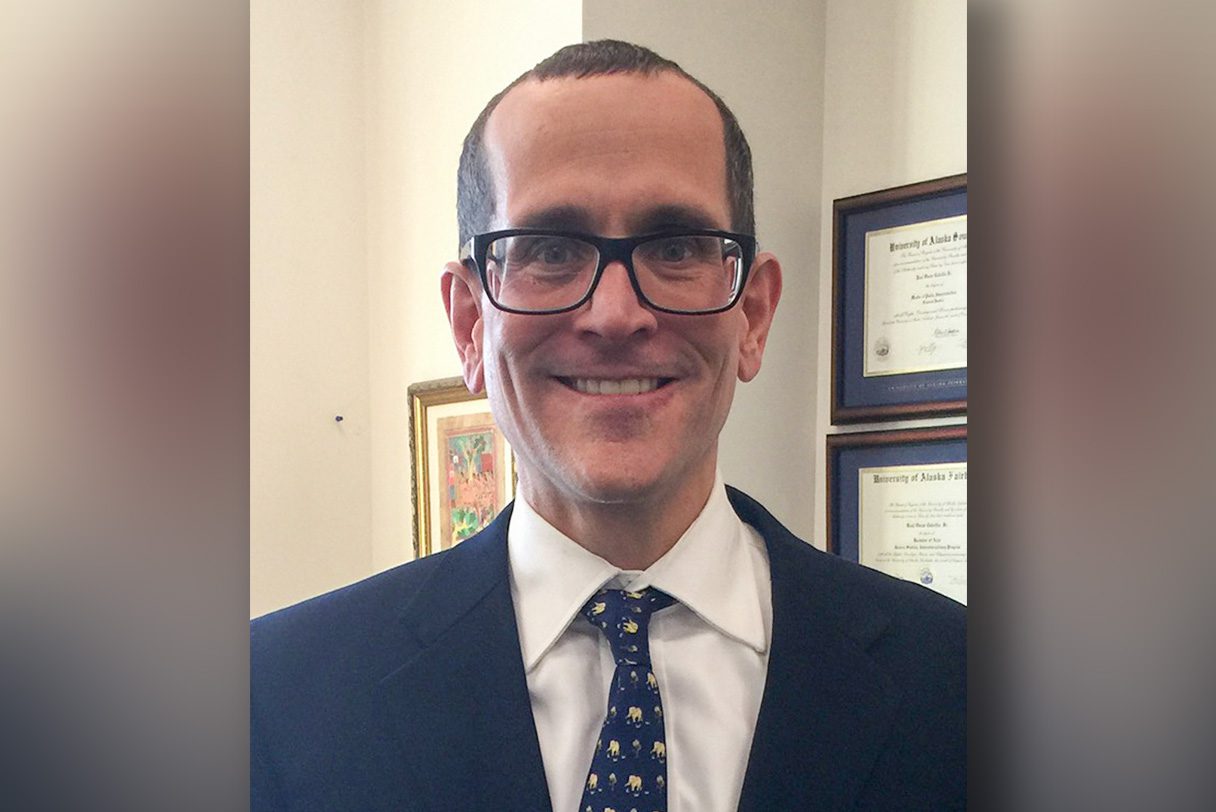
Superior Court Judge Romano DiBenedetto, who presides over Alaska’s Second Judicial District based in Nome, faces a public reprimand following a formal investigation into multiple instances of judicial misconduct.
The Alaska Commission on Judicial Conduct (ACJC) finalized its decision to recommend a public reprimand – rather than a more harsh disciplinary action such as a suspension or removal from office – at a Jan. 30 hearing.
Jessica Dillon with Anchorage-based law firm Dillon Findley & Simonian investigated the commission’s charges against DiBenedetto. She told the commission that the investigation found a public reprimand was the appropriate sanction for the conduct.
“I also considered the mitigating and aggravating factors previously recognized by the Alaska Supreme Court, and found that they're not sufficient mitigating and aggravating circumstances to warrant a deviation from the public reprimand as the ultimate sanction," Dillon told the commission.
According to filings by the ACJC, Judge DiBenedetto delayed an after-hours motion hearing in Unalakleet on Jan. 8, 2024, because he was watching a televised sporting event. When he finally arrived at the courthouse nearly an hour late, he told the attorneys that he had “gotten lost” without mentioning the true cause of the delay.
The hearing was conducted that evening, and the trial proceeded as scheduled the following day. DiBenedetto later admitted that this conduct violated the Alaska Code of Judicial Conduct by creating the appearance that a court matter did not take precedence over a personal activity.
The incident was one of several examples cited in the commission’s formal complaint, which alleged a pattern of behavior in which DiBenedetto canceled, moved, or delayed hearings for personal reasons, often with little or no advance notice.
Court staff and attorneys provided sworn statements describing frequent last-minute schedule changes, especially on Thursday afternoons and Fridays, to accommodate the judge’s travel. Staff reported difficulties reaching DiBenedetto during these absences and said the disruptions created burdens for the court and inconvenience for attorneys and litigants.
Another allegation involved DiBenedetto’s off-record behavior around court staff. Multiple employees reported that he impersonated courtroom participants, including Alaska Native individuals and a Vietnamese police officer, using exaggerated accents. Judicial assistant Leslie Brand testified that she left the room during one such episode because it made the workplace uncomfortable.
Robert Colvin, Area Court Administrator for the Second Judicial District, said in an affidavit that DiBenedetto used “language that would indicate that the person was of lower intelligence” when mimicking Native Alaskans. Colvin said he could not say "with confidence how many times I observed this type of behavior because it was frequent."
Kawerak, Inc. President, Melanie Bahnke, addressed the alleged conduct in a July 2025 letter to the ACJC.
“A part of a judge's effectiveness in rural Alaska is understanding social norms and customs and recognizing that those who come before them may not speak English as their first language, nor sound like urban Caucasians, but they are just as worthy of justice as everyone else” Bahnke wrote.
While DiBenedetto acknowledged that these impersonations violated Canon 2A, he denied violating Canon 3B(5), which prohibits expressions of bias or prejudice. He and several staff members argued that the impersonations extended to people of all backgrounds and were part of his expressive storytelling style, not an indication of malice or bias. The commission ultimately agreed that the weight of evidence did not support a finding of actual prejudice under Canon 3B(5), but concluded the behavior still created the appearance of impropriety.
DiBenedetto, through counsel, accepted the findings at the Jan. 30 hearing and agreed to the commission’s recommendation for a public reprimand.
In its filing to the Alaska Supreme Court, the commission described his conduct as negligent rather than malicious, and noted mitigating factors, including his cooperation and lack of prior disciplinary history. However, it also pointed to his years of experience on the bench, having been appointed in 2017 and retained in 2020, as a reason he should have known better.
The commission’s recommendation now awaits review by the Alaska Supreme Court, which has final authority to impose disciplinary sanctions against judges. If accepted, the reprimand would formally censure DiBenedetto but allow him to remain in his position on the bench.
Rebecca Koford, a spokesperson for the Alaska Court System, said DiBenedetto will remain on administrative leave until the Alaska Supreme Court weighs in. In the meantime, Utqiagvik Superior Court Judge David Roghair will continue covering for the Nome court. Koford said the court has also called upon retired judges to handle hearings and trials as needed.
"We are committed to meeting the needs of the Nome court and Western Alaska communities, and will continue to provide judges and personnel to ensure that cases are not delayed due to the court system," Koford said in an email.


