
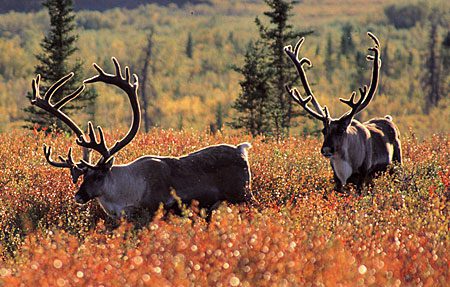
The Western Arctic Caribou Herd has fallen to historic lows, raising fears that the population could soon cross a point of no return. In 2003, the Alaska Department of Fish and Game counted 490,000 caribou roaming Western Alaska’s expansive tundra. Nearly every census since then has shown steep declines.
Today, the Western Arctic Herd is estimated at just 120,000 caribou.
Nome-based hunter and member of the Western Arctic Caribou Herd Working Group, Charlie Lean, said bold action is needed to prevent irreversible damage.
“We can drive this population to zero with just a lack of attention. It’s very, very critical right now,” Lean said.
Lean met with regional representatives and government officials at a meeting of the Western Arctic Caribou Herd Working Group in Anchorage on Dec. 9.
After three days of collaboration and debate, the group drafted a series of recommendations for state and federal regulators. It convened with a unified message, annual harvest levels must be lowered, especially of breeding-age females.
Lean said he pushed the group to decide on a population count that would trigger a full-stop to caribou hunting.
“We didn’t have a drop-dead number,” Lean said. “In most management regimes, there is a point of no return and it seemed like we had to make that point somewhere.”
Lean recommended 75,000 caribou, a count not seen in half-a-century.
Lean acknowledged that reduced harvests mean real hardship for families who rely on caribou for food.

“We know this is unpopular. Everybody wants more caribou,” Lean said. “I’m not trying to tell people they should smile when they’re in pain. What I’m trying to do is get support for the idea that we’re all stewards of this population.”
Without emergency action, the earliest regulatory changes wouldn’t take effect until mid-2027 — a timeline Lean fears may be too late. He estimates the herd could lose another 20% by then, underscoring that conservation is no longer optional — it's imperative.


