

A $399.4 million construction contract has been awarded for the first phase of the Port of Nome Modification Project. The long-awaited award comes after decades of planning and a failed contract solicitation in October 2024.
The U.S. Army Corps of Engineers said last year that the initial round of bids went beyond its "statutory limits”. A pared-down version of Phase 1, known as Phase 1A, went back out to bid in February.
The corps announced Friday it awarded the revised contract to Kiewit Infrastructure West Co. The Washington-based company already has a foothold in the region, with a partnership with Bering Straits Native Corporation to ship thousands of tons of rock from Nome to Utqiagvik.
Kiewit was the only company to bid on the project, according to the U.S. Department of Defense.
In response to the successful bidding process, Port of Nome Director, Joy Baker, said Friday “we are looking forward to starting this long-awaited project.”
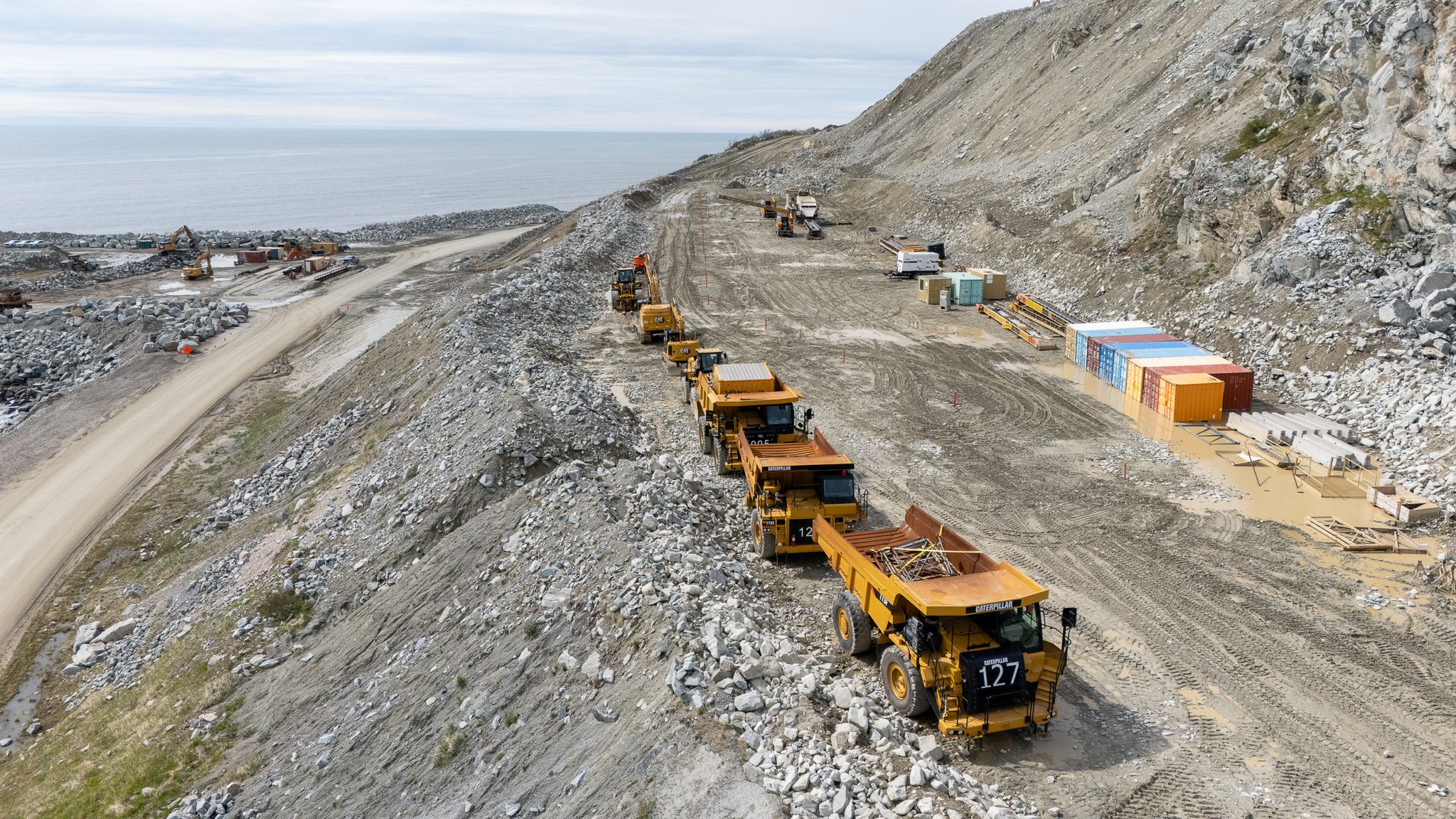
The initial phase of the project will extend Nome’s causeway by 1,200 feet and add about 600 feet of new dock face. Phase 1B will add an additional 1,870 feet of dock space, followed by Phase 2 which will primarily focus on deepening the harbor. Phase 3 will widen the port's inner harbor by shifting the east causeway further east. Additional dredging will occur to aid in inner harbor navigation.
Once complete, the port will be able to accommodate large military ships like U.S. Coast Guard cutters, cruise ships and container ships.
In a press release, USACE Alaska District Commander, Col. Jeffrey Palazzini, called the project “foundational to the long-term viability of surrounding communities in the region.”
“We are committed to assisting the City of Nome by providing a reliable solution that improves the port’s navigation efficiency,” Col. Palazzini said.
The City of Nome is serving as the project’s non-federal sponsor, with the city contributing 10% of the project’s costs. According to the project’s feasibility study completed in 2020, the project was expected to cost nearly $500 million. That figure will likely balloon as inflation and tariffs are expected to raise expenses.

A gateway for western Alaska and the Arctic
Nome has long served as the maritime hub for the Bering Strait region, supporting resupply, fuel delivery and seasonal cargo operations for dozens of smaller communities. It also serves as a major research hub for the rapidly-changing Arctic environment.
Local leaders have pushed for port expansion for decades, citing both economic and safety reasons. Larger vessels, including fuel tankers and cargo ships, are currently unable to fully access Nome’s harbor due to its shallow depths. The outer basin is currently only 22 feet deep, limiting it to ships with drafts of about 18 feet.
The expansion project will create a new deep-water basin dredged to a depth of 40 feet, enabling larger vessels to dock directly in Nome rather than lightering offshore. Officials say the change will reduce costs for goods and fuel in the region and improve the safety and efficiency of marine operations.
Mineral company Graphite One plans to use the port to ship thousands of specialized containers to the lower 48 for processing. The Department of Defense has invested millions of dollars in the critical mineral project just entering the permitting process. Graphite One hopes to begin operating around the end of the decade.

Nome’s location near the Bering Strait also gives it unique importance as Arctic shipping lanes become more active. Melting sea ice in recent decades has led to longer ice-free seasons in the Bering Strait, which connects the Pacific and Arctic oceans.
At its narrowest point, the Bering Strait spans just 55 miles between the United States and Russia. The strategic chokehold is drawing attention from the U.S. military.
The weekend before the corps' announcement, the Coast Guard’s top-ranking official visited Nome to meet with city officials and a local delegation. Acting Commandant of the Coast Guard, Adm. Kevin Lunday, said his visit “reinforced Nome’s strategic role as an Arctic port and part of the U.S. northern border.“
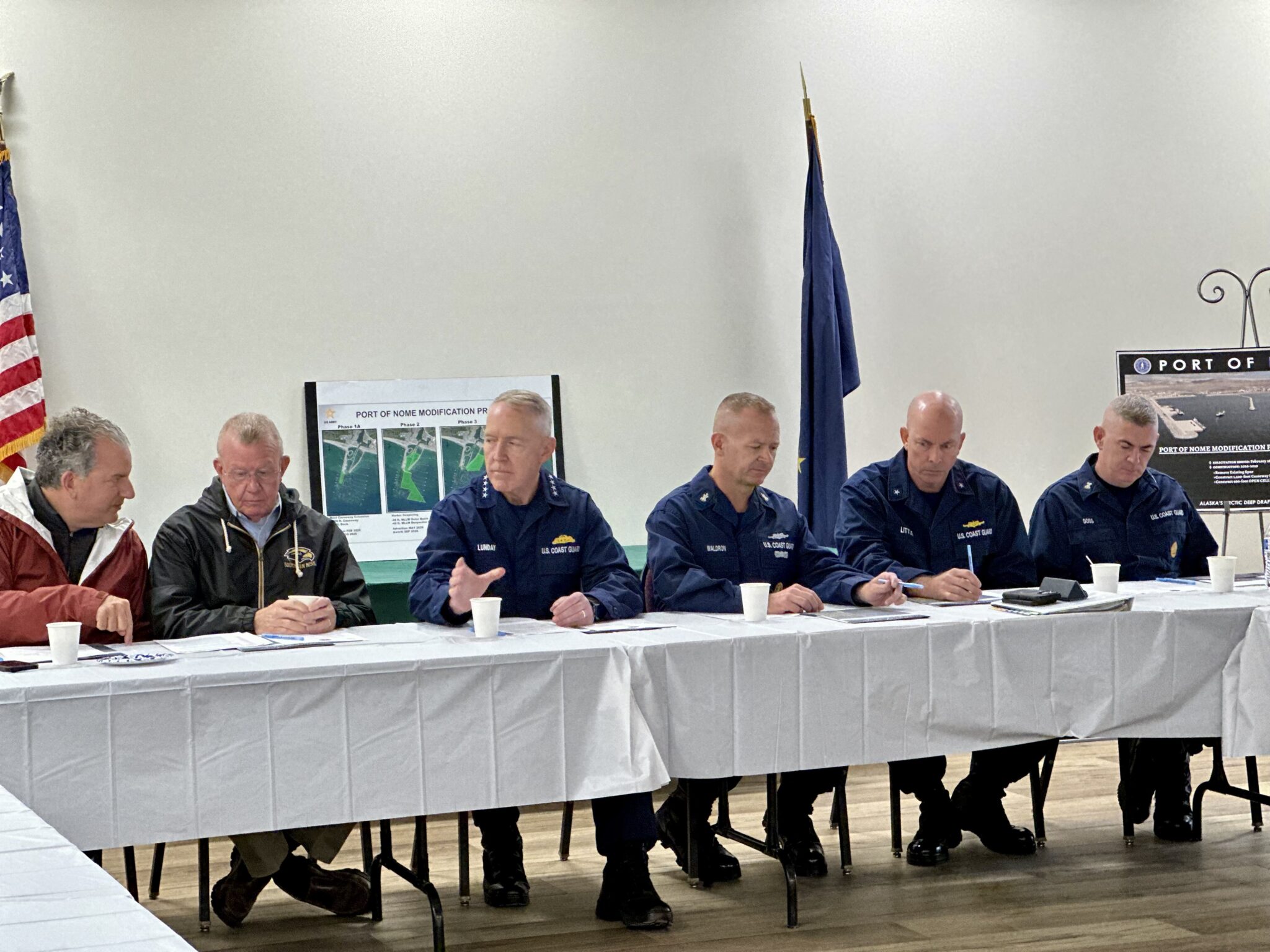
Nome Mayor John Handeland said at Monday's Nome Common Council meeting the visitors were impressed by Nome.
"I think by the community and the activity and the plans, recognize that the Arctic is someplace where things are happening and that they need to be here," Handeland said.
Commercial shipping traffic through the strait has more than doubled since 2009, according to Marine Exchange of Alaska. Military activity has increased too, with Russian and Chinese vessels regularly transiting the Bering Strait.
According to a Department of Defense announcement, Phase 1A has an estimated completion date of Sept. 5, 2029. Given Nome’s seasonal sea ice and the project’s massive scale, work will not likely begin until summer 2026.


